


Most conversations about dimensioning focus on billing accuracy and carrier adjustments. Those are legitimate use cases, but they undersell the operational role that measurement plays in warehouse throughput. When accurate dimensions are in the right place at the right time, they enable better decisions at every downstream step. When they’re missing or wrong, those downstream steps generate exceptions, rework, and delays.
Where measurement fits in the warehouse flow
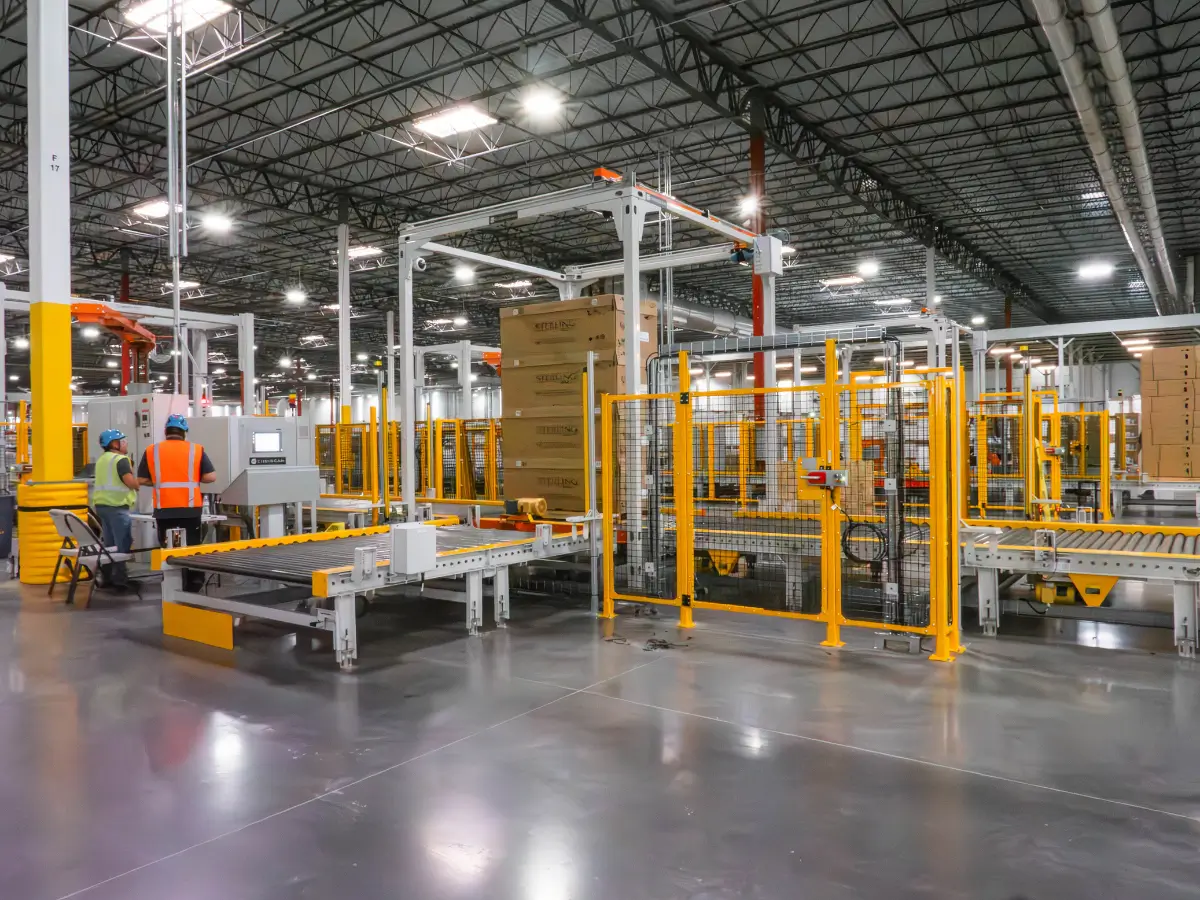
Dimensioning can happen at multiple points in a warehouse workflow: at receiving for item master data, at a workstation for order verification before packing, and at the outbound line for carrier billing declaration. Each placement serves a different purpose and feeds different downstream decisions.
Receiving-point measurement feeds the item master, which then drives slotting, cartonization, and outbound declaration for every subsequent order containing that SKU. The ROI of receiving-point measurement compounds over the life of the item in the catalog.
Outbound-point measurement captures the actual packaged shipment dimensions at the moment of shipping. Even with accurate item master data, the packaged shipment may differ from the sum of item dimensions due to void fill, protective packaging, or multi-item packing. Outbound measurement is the only way to capture the actual package at ship time.
Where dimensioning becomes a bottleneck
Dimensioning becomes a bottleneck when it’s inserted into the flow without enough throughput to keep pace with upstream operations. A workstation dimensioner that takes 10 seconds per measurement will not keep up with a pick line producing 1,200 units per hour. The measurement becomes the rate-limiting step, and the line backs up behind it.
The throughput requirement drives the system selection. Static workstation dimensioners are appropriate for receiving workflows and lower-volume outbound applications. In-motion dimensioners that measure packages on the conveyor without stopping them are appropriate for high-volume outbound lines where throughput is the constraint.
The Cubiscan 200-SQ is designed for in-motion parcel measurement at conveyor speed. The automated warehouse shipping solution shows how in-motion dimensioning integrates with the complete end-of-line workflow without creating a throughput constraint.
Exception handling as a throughput lever
The exception rate (the percentage of packages that fail measurement or trigger an anomaly) is a key throughput variable. Every exception that stops the mainline flow to resolve is a throughput event. In-motion systems with dedicated exception lanes resolve measurement anomalies offline without stopping the mainline.
Designing the exception path as part of the system design, rather than as an afterthought, is the difference between a measurement system that maintains throughput and one that limits it. Warehouse sorting systems connect to the measurement system to route exceptions automatically without manual intervention in the mainline flow.
Dimensioning as a data quality investment
The throughput argument for dimensioning is ultimately a data quality argument. Accurate dimensions produce better slotting decisions, better cartonization, fewer pack station rework events, more accurate carrier declarations, and fewer post-shipment adjustments. Each of those improvements reduces a form of operational friction that consumes labor, delays shipments, or generates unexpected cost. To discuss how dimensioning fits into your specific workflow and throughput requirements, contact Cubiscan.
Frequently asked questions
| What throughput can an in-motion dimensioner handle? In-motion dimensioners are designed to measure packages at conveyor speed without stopping them. The specific throughput rate depends on the system model, conveyor speed, and package spacing. The Cubiscan 200-SQ handles high-volume parcel operations at automated outbound line speeds. For specific throughput specifications for your line configuration, contact Cubiscan. |
| Should I measure at receiving, at outbound, or both? The answer depends on what you need the dimensional data for. Receiving measurement is appropriate when the primary use case is item master accuracy for slotting and cartonization. Outbound measurement is appropriate when the primary use case is carrier billing accuracy. Both is the most complete solution but requires investment at two points in the flow. Many operations start at outbound (immediate billing benefit) and add receiving measurement as a second phase. |
| How does an in-motion dimensioner handle exception packages without stopping the line? When an in-motion dimensioner flags a measurement exception (package out of range, barcode failure, or anomalous measurement), it signals the sortation system to divert the package to an exception lane before it reaches the carrier lane. The mainline continues processing. The exception package is resolved offline and re-enters the flow after correction. |
| What is the relationship between item master accuracy and warehouse throughput? Item master accuracy affects throughput at multiple downstream points. Accurate dimensions produce better cartonization recommendations, which reduce pack station rework. Better slotting based on accurate dimensions reduces pick path length and improves pick efficiency. Accurate outbound declarations reduce post-shipment adjustments, which reduces administrative rework. Each of these is a throughput improvement enabled by item master accuracy. |


