


Manufacturing companies deal with a data problem that distribution and fulfillment operations inherit: item master records. When a new product comes off the line, someone needs to capture its dimensions and weight and enter them into the system. How that happens, and how accurately it happens, determines the quality of the data that every downstream operation depends on. If the dimensions are wrong at creation, they’re wrong everywhere the item master is used.
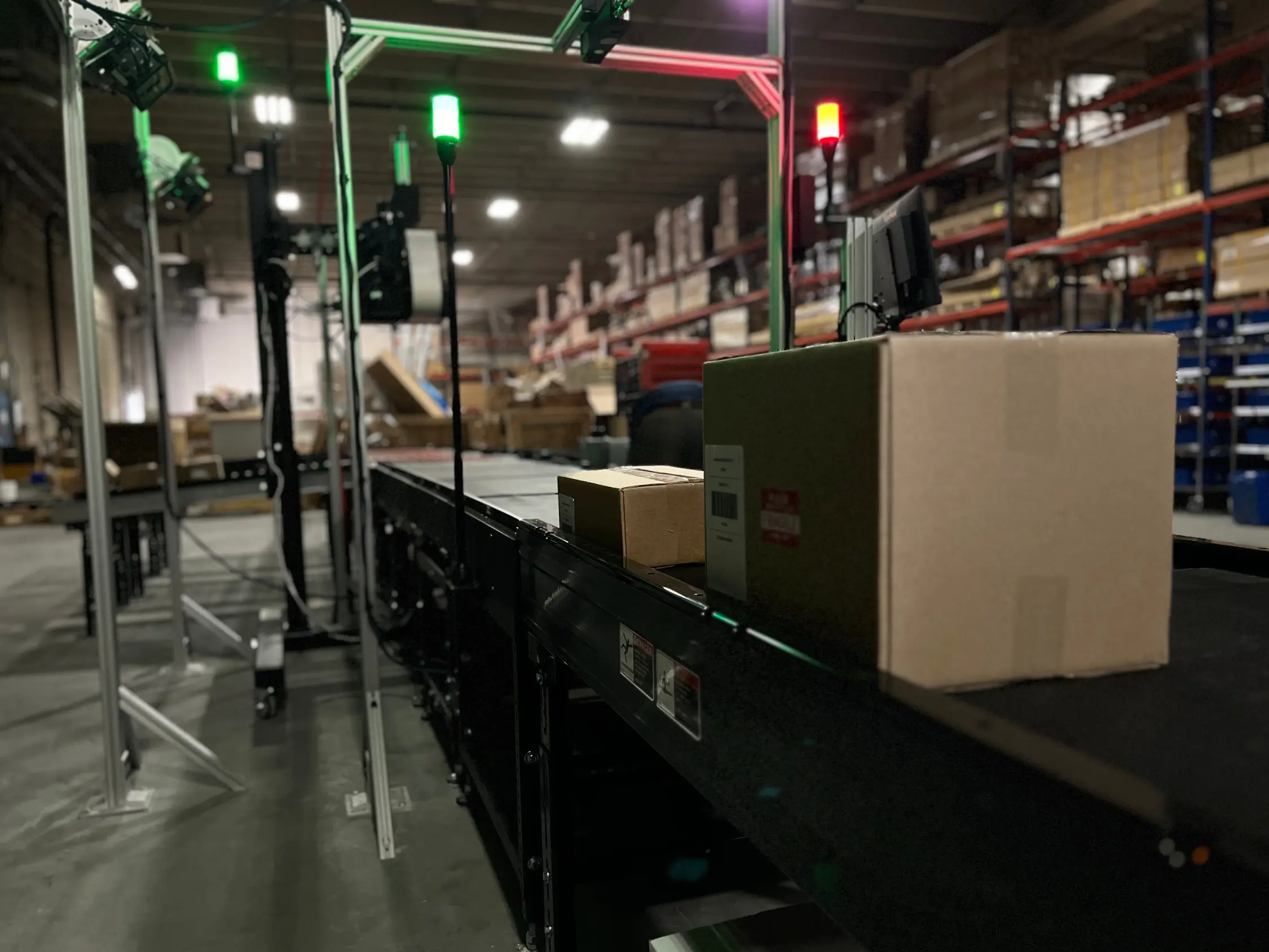
Where item master data gets created in manufacturing
In most manufacturing environments, item master dimensional data is created at one of three points: during product development from engineering drawings, during new product introduction (NPI) when a physical sample is first produced, or at receiving when finished goods enter the warehouse. Each point has a different accuracy profile.
Engineering drawings provide theoretical dimensions that don’t account for manufacturing tolerances, packaging, or how the physical product differs from the model. NPI measurement is more accurate but often happens once and may not reflect production variation across batches. Receiving measurement is the most accurate option because it captures the actual finished and packaged product at the point it enters inventory.
New product introduction and the measurement window
NPI is the highest-leverage moment for capturing accurate dimensions. When a product is being prepared for commercial production, a physical sample exists, packaging is defined, and the dimension data created at this stage will seed the item master for the product’s entire lifecycle. Measuring accurately at NPI rather than relying on drawings or supplier specs sets the foundation for every system downstream.
The Cubiscan 325 is used in master data programs that require high measurement precision and repeatability. For products where dimensional specifications matter for regulatory, compliance, or packaging design reasons, that precision level is relevant from the NPI stage.
Workstation dimensioning on the production floor
For manufacturers that produce and package products at the same facility, dimensioning at the end of the production line or at the packaging station captures dimensions at the moment the finished, packaged product exists. That measurement feeds the item master directly without requiring a separate receiving step.
The Cubiscan 100 is a workstation dimensioner suited for both production-floor and shipping applications. For manufacturers packaging a wide variety of product sizes and carton configurations, it handles the range without requiring system changes between products.
Verification for packaging compliance
Many manufacturers ship to retail buyers with strict vendor compliance requirements that include specific dimensional specs for case packs, display units, and pallets. A dimensioner on the production floor or at shipping can verify that finished goods match the required spec before they leave the building, rather than discovering a discrepancy at the retailer’s receiving dock where chargebacks apply.
That verification step turns the dimensioner from a data capture tool into a quality checkpoint. Products that don’t meet spec are identified before shipping, not after.
The downstream value of accurate manufacturing data
Accurate item master dimensions created at the manufacturing stage flow downstream to every operation that handles the product. Distribution centers slot correctly. 3PLs bill storage accurately. Carriers calculate dimensional weight based on the actual package. Cartonization software selects the right box. Each downstream benefit traces back to the quality of the measurement at the source.
Cubiscan cubing software supports the data management process that routes measurements from the dimensioner to the WMS, ERP, or product information system where the item master lives. To explore how dimensioning fits a manufacturing environment, start with the dimensioning system overview.
Build the item master right the first time
To discuss dimensioning options for manufacturing floor, NPI, and shipping applications, contact Cubiscan directly. Getting the measurement right at creation is the most efficient way to build an item master that downstream operations can rely on.
Frequently asked questions
| Why is item master data often inaccurate when it comes from engineering drawings? Engineering drawings describe theoretical dimensions that don’t account for manufacturing tolerances, packaging materials, or how the physical product differs from the model. A product measured from the drawing may have different actual dimensions than the finished, packaged item that enters inventory, and those differences compound when the drawing data seeds the item master. |
| When in the product lifecycle is the best time to capture item dimensions? At new product introduction, when a physical sample of the finished, packaged product first exists. That measurement captures the actual product rather than a theoretical specification, and the data created at that point seeds the item master for the product’s entire lifecycle. For products that go through packaging changes, re-measuring at the next significant change is the right practice. |
| How does dimensioning on the production floor support vendor compliance programs? A dimensioner at the production floor or shipping station verifies that finished goods match the buyer’s dimensional spec before they leave the building. Products outside spec are identified and corrected before shipping, rather than generating a chargeback at the retailer’s receiving dock. |
| Can manufacturing dimensioning systems integrate with ERP platforms, not just WMS? Yes. Dimensioning systems can be configured to route measurement data to the system that owns the item master, whether that’s a WMS, an ERP platform like SAP or Oracle, or a product information system. Cubiscan cubing software supports integration across platforms. The specific integration path depends on the target system and its data interface capabilities. |


