


Traditional dimensioning systems work by detecting the edges of a package. Laser-based systems project light across the package surface and calculate dimensions from where the light hits and reflects. That works well for rigid cartons with consistent, predictable geometry. It doesn’t work well for polybags, mailers, flats, soft-sided packages, and irregular items that deform under measurement conditions or don’t have straight edges for the sensor to detect.
For most of warehouse history, that was a minor limitation because most outbound was rigid cartons. That mix has changed significantly with the growth of e-commerce and direct-to-consumer fulfillment. In many operations, polybags and irregular items now make up a significant share of outbound volume. The gap in what traditional systems can measure has become a meaningful operational problem.
What happens when a dimensioner can’t measure the package
When a dimensioner fails to capture accurate dimensions for a polybag or irregular item, the operation has a few options. It can skip the measurement and use a database estimate. It can manually measure and enter dimensions. It can flag the item for an exception lane where a separate process handles it. Each option has a cost: estimated dimensions produce billing errors, manual measurement adds labor, and exception lanes create throughput interruptions.
At low volume, the workarounds are manageable. At high volume, skipping measurement for an entire category of outbound packaging produces a systemic billing and data quality problem. Every polybag that ships on an estimate is a potential carrier adjustment waiting to happen.
How legacy systems attempt to handle irregular items
Some older dimensioning systems include a manual override mode for items that can’t be measured automatically: the operator enters dimensions by hand. This solves the immediate billing problem for that package but creates the same inconsistency issues as manual measurement: different operators, different results, no automated record.
Others use bounding box measurement, capturing the outermost dimensions of whatever object is on the measurement surface. For irregular items, the bounding box may overstate the actual dimensional weight volume because it includes empty space within the bounding box. The carrier doesn’t bill for empty space; it bills for the actual dimensional weight calculation from the outermost dimensions. For some items this works. For polybags that compress unpredictably, the bounding box varies by how the bag was placed.
Machine learning as the solution
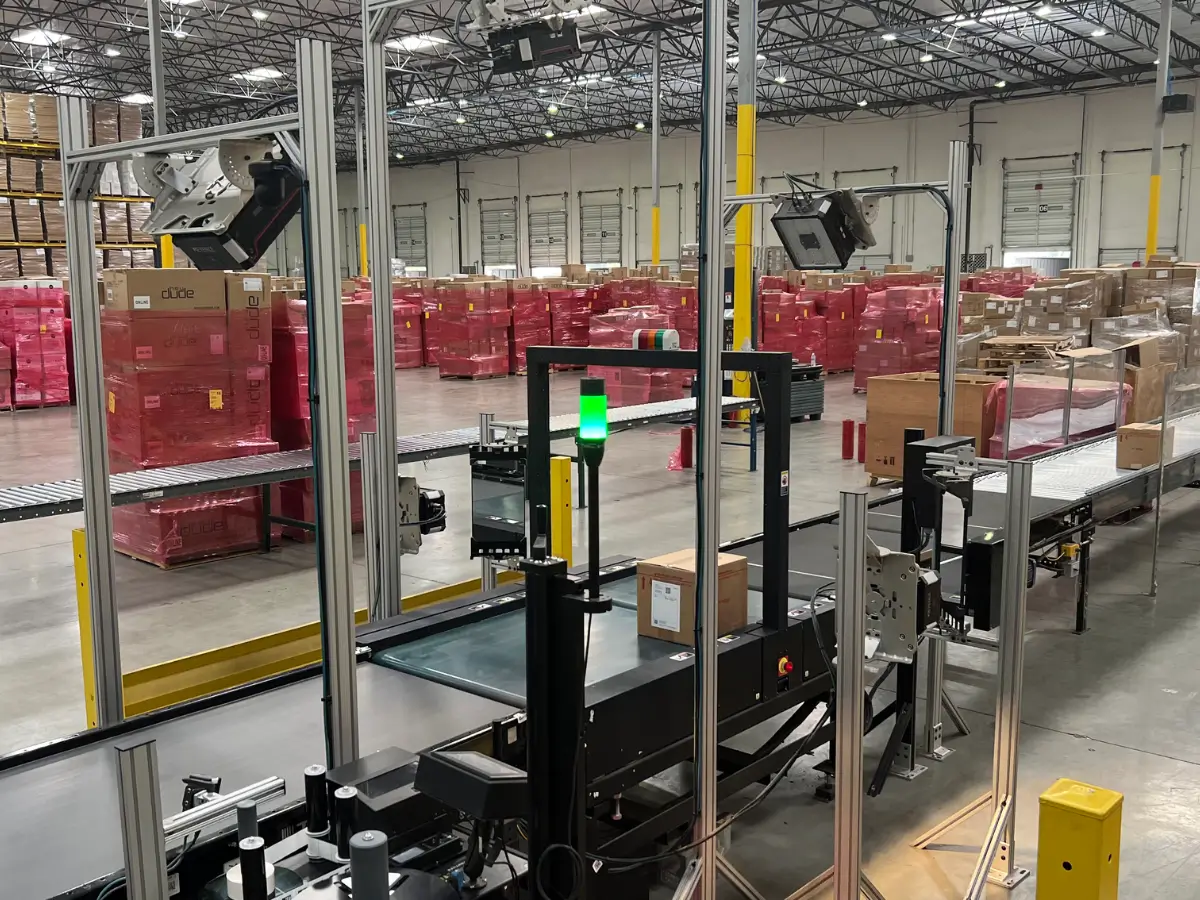
The Cubiscan 75 Pro uses machine learning to measure polybags, flats, and irregular items without requiring them to have defined geometric edges. The system is trained on a wide range of packaging types and shapes and can produce accurate measurements for items that conventional sensor-based systems misread or can’t measure at all.
That capability matters operationally because it eliminates the exception lane for the polybag and irregular item category. Items flow through the same measurement station without a separate process. The Cubiscan 75 Pro covers the measurement gap that conventional systems leave open.
The billing impact of the measurement gap
For operations where polybags are measured by estimate, the billing impact runs in both directions. If estimates are typically conservative, the operation may be paying more per package than the actual dimensional weight warrants. If estimates are drawn from a database and the actual bag dimensions vary by fill level or product, some shipments are underdeclared and the carrier adjusts post-shipment.
Actual measurement eliminates both forms of error. The declared dimensions reflect what was in the bag at ship time, not what the spec sheet says or what the estimator assumes. The dimensioning system overview covers the full product range for different packaging categories and measurement environments.
Close the measurement gap in your operation
If polybags, mailers, or irregular items represent a meaningful share of your outbound volume and are currently being measured by estimate or exception, that gap has a specific solution. To explore the Cubiscan 75 Pro and how it fits your outbound workflow, contact Cubiscan.
Frequently asked questions
| Why can’t traditional dimensioners measure polybags accurately? Traditional dimensioners detect package edges using laser or structured light sensors. Polybags and soft-sided packages deform when placed on a surface, don’t have consistent edges, and change shape between measurements. The sensor can’t reliably find the edges it needs to calculate dimensions, which produces errors or failed measurements. |
| What is machine learning-based dimensioning and how does it handle irregular items? Machine learning-based dimensioning trains on a large dataset of package shapes and types, allowing the system to recognize and measure items that don’t fit the geometric patterns that rule-based sensor systems require. The Cubiscan 75 Pro uses this approach to accurately measure polybags, flats, and irregular items that conventional systems can’t handle reliably. |
| What does it cost to leave polybags unmeasured or measured by estimate? The cost shows up as billing errors in both directions: overcharging when estimates are larger than actual dimensions, and carrier post-shipment adjustments when estimates are smaller. It also shows up in the exception handling process: the labor and throughput cost of a separate measurement or manual entry step for packages that don’t go through the automated system. |
| Is the Cubiscan 75 Pro designed only for polybags, or does it also handle rigid cartons? The Cubiscan 75 Pro handles both. It is designed as a workstation dimensioner for operations with a mixed outbound packaging including rigid cartons, flats, polybags, and irregular items. The machine learning capability addresses the items that conventional sensors struggle with, while the system still handles standard rigid packages accurately. |


