


The outbound line is where small inefficiencies compound fast. A label applied at the wrong time, a missing weight record, a package measured manually by an associate who is three hours into a peak shift — each of those gaps is small on its own. Together, they create a line that is slower than it should be and more prone to carrier adjustments than it needs to be.
Combining parcel dimensioning with print and apply labeling closes those gaps. When the two systems work together, packages get measured, weighed, labeled, and verified as part of a single workflow instead of a series of handoffs.
What each system does on its own
Parcel dimensioning
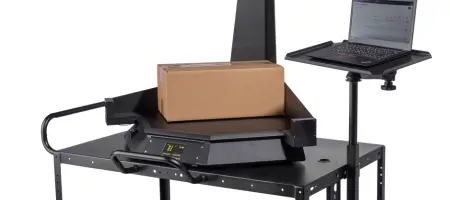
A parcel dimensioner captures length, width, height, and weight for each package and ties that record to a shipment identifier. That data feeds the WMS, TMS, or carrier platform so declared package information matches what the warehouse actually shipped. The dimensioning system overview covers the full range of static and in-motion options.
Print and apply labeling
A print and apply system generates a carrier label at the right moment and applies it to the package in the correct position with a verified barcode read. Manual labeling introduces variability: labels placed crooked, misread barcodes, wrong package associations. Automated systems eliminate that variability at volume. The print and apply label machine and automated print and apply labeler pages describe the available options.
Why they work better together
When dimensioning and print and apply run as separate steps, the gap between them is where problems enter. If dimensions are captured at pack-out but labels are printed at the dock, a package can get re-handled or mixed with others before the label is applied. If the label goes on first, the dimensional record may not match the labeled shipment.
Running them together closes that window. The sequence becomes: identify the package, capture dimensions and weight, generate the label from that verified record, apply it, and confirm the barcode reads correctly. That chain produces a cleaner record and a more consistent label. For high-volume lines, this can happen at conveyor speed. The automated warehouse shipping solution page describes how dimensioning, labeling, verification, and sortation fit into a complete end-of-line workflow.
The operational improvements that follow
Fewer touches per package
When dimensioning and labeling are part of the same line segment, packages move through both steps without the stops and restarts that manual handoffs create. That reduces per-package labor cost and keeps outbound flow consistent.
More accurate shipment records
The label reflects the actual measured record. When carriers audit, the declared dimensions match the labeled package. According to FreightWaves, carriers continue to expand dimensional surcharges and tighten billing logic, which makes consistent, accurate records more valuable each year.
Reduced rework
Label problems are a leading source of outbound exceptions. When print and apply follows a confirmed dimensional capture, label association is cleaner. The system knows which package is being labeled because it just measured it, which reduces mislabeling and the rework that follows.
A foundation for sortation
When packages are dimensioned and labeled in one connected sequence, the sortation step becomes more reliable. The sorter receives packages with clean reads and verified records. For facilities extending the workflow into sorting, package sorting equipment and warehouse sorting systems describe the downstream options.
When to consider combining the two systems
The combined workflow makes the most sense when outbound volume is high enough that manual labeling creates bottlenecks, carrier billing adjustments are frequent and hard to dispute, label quality is inconsistent across shifts, or the operation is planning a full SLAM line build. Many facilities start with dimensioning at pack stations to establish data discipline, then integrate labeling automation as the line scales.
What to plan for during integration
Getting the most from a combined workflow requires alignment between the dimensioning system, label software, carrier platform, and WMS. Key integration points include how the dimensional record ties to the order ID, how the label template pulls from the verified record, how barcode verification is confirmed, and how exceptions are routed so the mainline keeps moving. Most integrations are straightforward when the data flow is mapped clearly before installation.
Build a line that ships clean records from the start
Parcel dimensioning and print and apply are more than individual improvements. Together, they create an outbound process where each package enters the carrier stream with a verified record and a confirmed label. To explore how these systems can fit your outbound line, start with the dimensioning system overview and the print and apply label machine page. For questions about your facility, contact Cubiscan.
Frequently asked questions
| What is print and apply labeling? Print and apply labeling is an automated process that generates a carrier label and applies it to a package at the correct position during outbound processing. It replaces manual label printing and placement, reducing errors and improving consistency at volume. |
| Does a parcel dimensioner need to connect to a print and apply system? They can operate independently, but connecting them creates a cleaner workflow. When dimensioning feeds directly into label generation, the label reflects the verified package record, which reduces mismatches and rework downstream. |
| How does the combined workflow reduce carrier adjustments? When dimensions are captured and the label is generated from that same record, the declared package information matches what the carrier receives. That alignment reduces the adjustments carriers apply when declared and measured data do not match. |
| Can this setup handle polybags and mailers? Yes. Static dimensioning systems like the Cubiscan 75 Pro are designed for mixed packaging types including polybags, mailers, and flats. Label application methods may vary by package type. |
References
• FreightWaves. Proliferation of Parcel Delivery Surcharges Drives Up Shipping Rates. https://www.freightwaves.com/news/proliferation-of-parcel-delivery-surcharges-drives-up-shipping-rates


