


The warehouse automation conversation has been focused for years on equipment: conveyors, sorters, robots, and put walls. The next phase is different. It is about data connectivity. Specifically, it is about making the data those systems generate available to every other system that can use it, in real time, without manual handoffs.
Dimensioning data sits at the center of that shift. Every package that moves through a warehouse has dimensions. That fact is currently used primarily for billing and shipping compliance. In a more connected warehouse, those same measurements drive slotting decisions, cartonization, load planning, and carrier selection automatically, because the data is flowing where it is needed when it is needed.
What connected warehouse means operationally
A connected warehouse is one where the data generated by each operational process is immediately available to the processes that depend on it. Today, many warehouses operate with significant data latency. A new SKU is received, dimensions are captured at a workstation, and those dimensions reach the WMS after a manual upload or an end-of-day batch process. In the meantime, the WMS makes putaway decisions without the new data.
A connected system eliminates that latency. Dimensions captured at receiving are in the WMS before the pallet reaches the put location. Outbound measurements are in the TMS before the label is printed. Supply Chain Dive has documented the pressure on warehouse operations to improve data visibility and reliability as supply chain complexity increases. Real-time data connectivity is the operational response to that pressure.
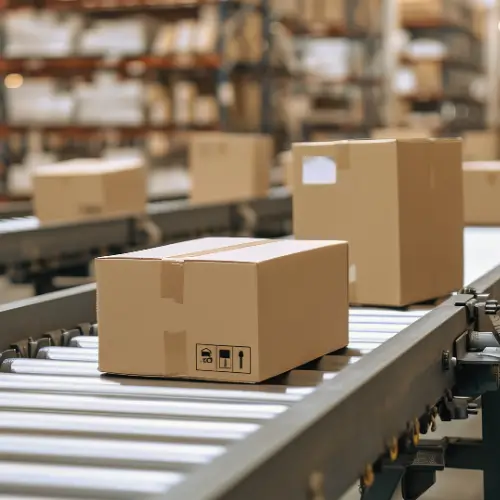
Dimensioning as data infrastructure
Historically, a dimensioner was measured by how accurately it captured dimensions. Going forward, it will increasingly be evaluated on how well it connects to the rest of the system. A dimensioner that captures accurate measurements but cannot pass that data to a WMS, TMS, or analytics layer in real time is only partially useful. The measurement is the foundation. The connectivity is what makes the measurement actionable at scale. Cubiscan cubing software is designed to manage dimensional records and support integration into the systems that use that data downstream.
How AI and automation use dimensional data
AI applications in warehouse operations depend on accurate, consistent data. Dimensioning is one of the most reliable sources because it produces precise, structured measurements that machine systems can use without interpretation. Several AI-driven applications are already using dimensional data or are positioned to do so.
Automated cartonization determines the optimal box size for a given order. Better input dimensions mean better box selection, which reduces packaging waste and lowers dimensional weight costs. Dynamic slotting engines assign pick locations based on demand patterns, velocity, and physical dimensions. When dimensional data is current and accurate, the model works from reality rather than estimates. Real-time carrier selection uses the actual dimensions of each package rather than averages to select the lowest-cost carrier option. And predictive exception handling uses dimensional variance data accumulated over time to identify patterns that predict exceptions before they reach the outbound line.
End-of-line automation as the near-term focus
While broader AI integration continues to develop, end-of-line automation represents the clearest near-term opportunity for connected operations. When dimensioning, print and apply, verification, and sortation are connected into one workflow, the data generated at each step is available to every other step in real time. A package flagged by the dimensioner for an out-of-tolerance measurement can be diverted by the sortation system automatically. A label printed by the print and apply system can be verified against the dimensional record captured seconds earlier. The automated warehouse shipping solution describes this end-of-line integration in detail.
Preparing for the connected warehouse today
Operations moving toward more connected data architectures can take concrete steps now: ensure dimensioning hardware supports integration with current WMS and TMS platforms; standardize measurement workflows so data is consistent enough for automated systems; invest in data management software that stores records in retrievable, structured formats; and plan exception workflows that generate structured records rather than ad-hoc resolutions. Each of these steps builds the data discipline that more sophisticated integration requires.
The measurement foundation for what comes next
Whatever the next phase of warehouse automation brings, it will require the same thing every previous phase has needed: accurate data about physical objects. Dimensional data is that foundation. To explore how dimensioning technology can fit into your current and future warehouse architecture, start with the dimensioning system overview. For a discussion of integration capabilities, see Cubiscan cubing software. To talk through specific integration requirements, contact Cubiscan.
Frequently asked questions
| What is the difference between warehouse automation and warehouse integration? Automation typically refers to equipment and processes that reduce manual labor. Integration refers to connecting those systems so they share data and coordinate decisions. The next phase of warehouse advancement increasingly depends on integration, not just automation. |
| How does dimensional data support AI-driven warehouse systems? AI applications like cartonization, dynamic slotting, and real-time carrier selection depend on accurate, structured data about physical items. Dimensioning provides that data consistently, which makes it a key input for AI-driven operational decisions. |
| What is cartonization and how does dimensioning help? Cartonization is the automated process of selecting the right box size for a given order based on the dimensions of the items included. Accurate item dimensions improve cartonization accuracy, which reduces packaging waste and lowers dimensional weight costs. |
| What role does cubing software play in connected warehouse architecture? Cubing software stores dimensional records and supports integration with WMS, TMS, and carrier platforms. It makes measurement data available to the systems that need it, turning a standalone dimensioner into part of a connected data infrastructure. |
References
• Supply Chain Dive. Re-Imagining Warehousing: Innovation and Resilience. https://www.supplychaindive.com/spons/re-imagining-warehousing-innovation-and-resilience/759654/


