


The term SLAM line shows up in a lot of warehouse automation conversations without much explanation of what it actually does. If you’re evaluating outbound automation for an e-commerce or high-volume fulfillment operation, understanding what a SLAM line is, and what it isn’t, will help you ask better questions before you talk to anyone trying to sell you one.
What SLAM stands for
SLAM is an acronym: Scan, Label, Apply, Manifest. It describes the automated outbound workflow that connects those four steps into a continuous, uninterrupted process between a packed box and a carrier-ready shipment.
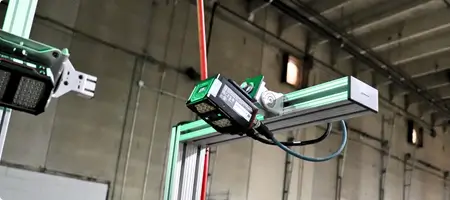
In a SLAM line, packages move through a sequence. They’re scanned to identify the order. They’re dimensioned and weighed to generate accurate carrier billing data. A label is printed and applied. The barcode is verified. The package is manifested. The whole sequence happens at conveyor speed, without a person handling the package between steps.
What it replaces
In a manual outbound operation, most of those steps happen at separate stations with people doing each one. A packer applies a label by hand. Someone else scans it. A scale reads the weight. Dimensions come from a product database or are estimated. The manifest runs at end of shift.
The problem with that model isn’t that it can’t work. It’s that at 500, 1,000, or 2,000+ packages per day, each manual step is a constraint and an error point. Labels go on the wrong boxes. Scale reads happen out of sequence. The manifest doesn’t match the physical shipment. SLAM automation removes those handoffs.
The role of dimensioning in a SLAM line
Dimensioning is the measurement step that makes the label accurate. When a package passes through an in-motion dimensioner on the SLAM line, the system captures length, width, height, and weight and generates the label from that verified record. The label reflects what’s actually in the package, not what a database said it should be.
That matters because carrier billing is based on the dimensions declared on the label. If the declared dimensions are wrong, the carrier remeasures and adjusts the invoice after the fact. Dimensioning on the SLAM line makes those adjustments rare by closing the gap between declared and actual. Cubiscan builds the measurement component for SLAM line workflows. The automated warehouse shipping solution page describes how dimensioning, print and apply, and sortation connect in a complete end-of-line system.
Who a SLAM line is for
SLAM lines are most common in e-commerce fulfillment, parcel sortation, and high-volume distribution operations. The investment is justified when volume is high enough that manual outbound processing creates a measurable bottleneck, when label accuracy is critical because carrier billing adjustments represent a real cost, and when throughput speed is a competitive requirement.
Operations processing fewer than a few hundred packages per shift may find that a static dimensioner at the pack station addresses the accuracy problem without the full SLAM line infrastructure. The dimensioning system overview covers the range of options from workstation systems through in-motion SLAM line components.
When the investment makes sense
The business case for a SLAM line typically rests on three factors: current billing adjustment costs that automated dimensioning would reduce, labor costs at outbound that automation would replace or redeploy, and throughput capacity that a manual line can’t sustain at current or projected volume. If all three are present, the ROI conversation is straightforward. If only one or two apply, a more targeted solution may be the better starting point.
Start with the measurement problem
Whether you’re evaluating a full SLAM line or a workstation dimensioner to address accuracy at a specific point in your outbound workflow, the right starting point is understanding the measurement gaps and volume constraints in your current process. To explore options and get a sense of what fits your operation, contact Cubiscan.
Frequently asked questions
| What does SLAM stand for in a warehouse automation context? SLAM stands for Scan, Label, Apply, Manifest. It describes the automated outbound workflow that connects package identification, dimensioning and weighing, label generation and application, barcode verification, and carrier manifesting into a continuous process at conveyor speed. |
| Does every e-commerce operation need a SLAM line? No. The investment is justified when volume is high enough that manual outbound creates a real bottleneck, when label accuracy problems are generating carrier billing adjustments, and when throughput speed is a competitive requirement. Smaller operations often address the accuracy problem with a static dimensioner at the pack station instead. |
| What is the role of a dimensioning system in a SLAM line? The dimensioner captures length, width, height, and weight as the package moves down the conveyor. That measurement feeds the label generation step, so the carrier label reflects the actual dimensions of the package rather than a database estimate. This reduces post-shipment billing adjustments by closing the gap between declared and actual dimensions. |
| How fast does a SLAM line process packages? Throughput depends on the specific components and conveyor configuration, but in-motion dimensioning systems are designed to operate at hundreds of packages per hour. The Cubiscan 200-SQ, for example, is built for automated outbound workflows at conveyor speed. Specific throughput ratings are system and configuration dependent. |


