


Freight disputes rarely start as “a big issue.” They start as a few inches, a few pounds, and a shipper who swears the pallet was smaller “when it left.”
That’s the problem: Disputes thrive in the gap between what was declared and what was actually moved. The fastest way to close that gap is a repeatable measurement record, captured the same way, every time, at scale.
For LTL carriers, dimensioning systems are not only a revenue protection tool. They’re a credibility tool. When the data is clean, disputes get shorter, adjustments get easier to explain, and customer-facing teams stop playing detective.
Why freight disputes happen in the first place
Most disputes come down to one of these:
- Dimensions or weight don’t match between shipper-provided info and carrier measurement
- Freight changed shape (overhang, bulge, leaning wrap, re-stacked pallets) during handling
- Class or density disagreements that turn into invoice arguments
- Missing documentation, so every side tells a different story
When a shipper disputes an adjustment, they’re rarely disputing your process. They’re disputing the facts. If the facts are not documented, the discussion becomes a negotiation.
Dimensioning turns it back into verification.
What “winning” a dispute actually means for carriers
Winning does not always mean “shipper pays immediately with a smile.”
In real operations, winning looks like:
- Adjustments that stick because they’re supported by proof
- Faster resolution because the record is easy to retrieve
- Fewer repeat disputes with the same shipper because expectations are clear
- Reduced internal labor tied up in audits and callbacks
- Cleaner shipper relationships because the dispute is factual, not personal
The goal is to reduce friction while protecting revenue. Both matter.
The dimensioning record is the dispute weapon carriers actually need
A strong dispute file is not a long email thread. It’s a clean record that answers the basic questions:
- What were the measured length, width, height?
- What was the measured weight?
- When and where were those measurements captured?
- What shipment ID ties the record to the invoice?
- Is there photo evidence of the freight condition and configuration?
Dimensioning systems make those fields consistent. That consistency is what makes the record defensible.
If you want a carrier-focused overview of how this fits your workflow, start with LTL carrier dimensioning systems.

Where dimensioning helps carriers win disputes most often
1) Reweigh and reclass disputes
When the shipper’s declared data differs from carrier measurements, the argument is usually about “what is true.”
A dimensioning system turns “true” into a stored record. That reduces ambiguity, especially when the shipment is irregular or the pallet is not cleanly uniform.
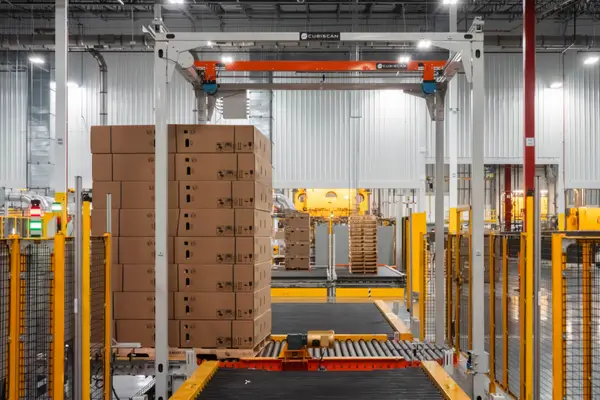
Carrier workflows built for this use case typically rely on pallet dimensioning systems like the Cubiscan 1200 for carriers, designed around capture points where freight is already moving through the terminal.
2) “That pallet was not that big” disputes
This is the classic. Shippers often measure pre-wrap, or measure without accounting for bulge, overhang, or irregular geometry. The carrier measures what moved through the network.
A dimensioning record that includes measurement plus documentation helps carriers show what was tendered at the time it was handled.
3) Damage, shortage, and “condition at tender” disputes
Not every dispute is purely about billing. Condition and configuration disputes are common, especially when a claim or chargeback follows.
When photos are tied to a timestamped record, the dispute becomes faster to sort out. A system like the Cubiscan 1200 is designed to capture dimensions, weight, and photo documentation during a workflow step many operations already use.
4) Repeat disputes with the same shippers
If you’re seeing repeat disputes from the same shipper profiles, the issue is usually process mismatch.
Dimensioning helps carriers identify patterns: lanes, customers, terminals, or commodity groups where declared data is routinely off. That makes it possible to address the root cause instead of arguing invoice by invoice.
The best place to capture data for dispute strength
For carriers, scan placement matters as much as scan accuracy.
High-impact carrier scan points usually include:
- Inbound verification lanes for measurement early in the terminal flow
- Rework areas where freight gets restacked or rewrapped
- Outbound verification points before linehaul moves
The best scan point is the one that produces a record that matches what your network actually moved, not what someone hoped the pallet would look like.
Make the data usable, or it won’t matter
Here’s a hard truth: if your ops team can’t retrieve a record quickly, your dispute process will still remain slow. The file has to be easy to find, share, and export.
But speed is only half the story. Your dimensional evidence also has to be trustworthy. Some dimensioning systems struggle with repeatability, meaning the same pallet can be scanned 10 times and produce 10 different results. When that happens, your team is forced to “hope” the number is right. That is a weak position in a freight dispute because you are trying to defend data that does not hold steady.
Consistent, precise measurements remove that risk. When you can rely on the same freight producing the same dimensions scan after scan, your records become defensible. That confidence matters when you are validating billed dimensions, documenting exceptions, and responding quickly with proof.
That’s also why calibration matters. A system that includes a calibration cube and a simple routine to verify accuracy at the start of a week or month helps teams trust that their measurements begin in a known-good state, and stay there. If your dispute workflow depends on dimensional evidence, you want repeatable results you can stand behind, plus an easy way to confirm the system is still reading correctly.
Finally, the storage and integration layer still matters. A platform like the Qbit software suite is built to collect, store, and export dimensional records so LTL carrier teams can pull what they need without digging through disconnected systems.
If you’re building dispute workflows around dimensional evidence, this resource is also worth keeping in your toolbelt: Freight audits depend on dimensional weight systems.
A carrier-ready dispute checklist
If your team wants a quick, repeatable standard, this is the baseline:
- Dimensions and weight captured consistently (same method, same process)
- Shipment ID tied to the record (PRO, barcode, or internal lane ID)
- Timestamp and terminal location saved automatically
- Photos stored with the record when disputes are common
- A standard “dispute package” export format for customer service and billing
If you can’t export a clean dispute package, you’re relying on persuasion instead of evidence. That’s not where carriers want to be.
Next step: Turn disputes into documentation
LTL disputes are not going away. But the time and cost of disputes can be reduced dramatically when every adjustment is supported by a consistent record.
Start with LTL carrier dimensioning systems and explore carrier-friendly options like the Cubiscan 1200 for carriers. If your terminals also need photo documentation integrated into the workflow, review the Cubiscan S9.
When you’re ready to map capture points and data outputs to your terminal flow, request a quote or contact Cubiscan.
FAQ
What should an LTL carrier store to win disputes more consistently?
At minimum: dimensions, weight, shipment identifier, timestamp, terminal location, and documentation (photos) when needed. The record has to be retrievable and exportable.
Where should carriers dimension freight to reduce disputes?
Inbound verification, rework areas, and outbound verification points are common high-impact scan locations. The right choice depends on where discrepancies most often occur.
Do photos really help with billing disputes?
Yes. Photos help confirm condition and configuration at the point of handling, which reduces “that’s not what we tendered” arguments and speeds resolution.
How do carriers standardize dimensional data across terminals?
Standardize the scan record fields, define the capture point, and store records in a system that supports sharing and export, such as Qbit.
Does dimensioning reduce disputes with repeat-offender shippers?
It helps identify patterns and provides consistent evidence, which reduces repeat arguments and supports proactive alignment with shipper teams.


